Mobility Training
Movement-focused sessions designed to support flexibility, joint control, and a comfortable range of motion to help counteract the stiffness of daily life.
Start Training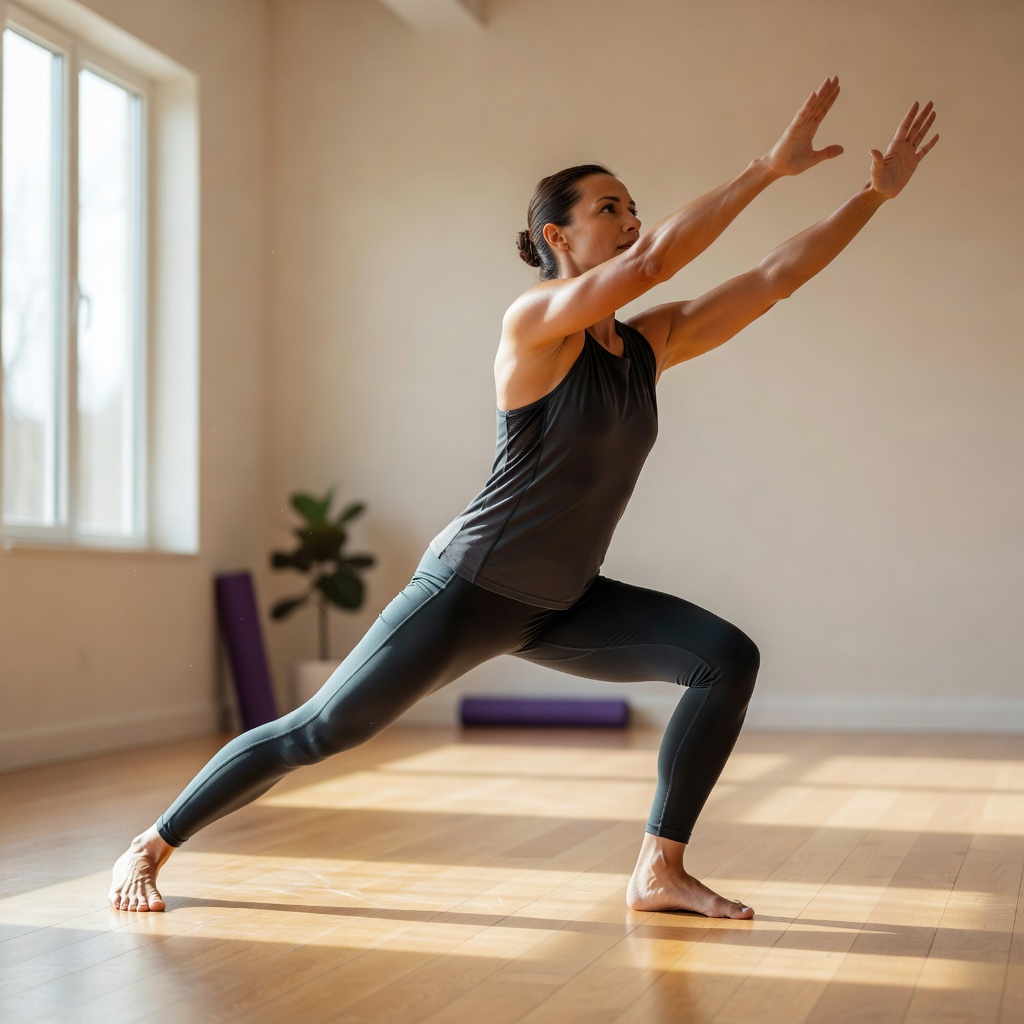
Restoring Free Movement
Mobility is often misunderstood as simply being able to touch your toes. In reality, mobility is about active control. It is the ability to comfortably move your joints through their full, intended range of motion while maintaining strength and stability throughout that movement.
Modern lifestyles, dominated by sitting at desks, driving, and looking at screens, often lead to a gradual restriction in how our bodies move. Shoulders round forward, hips become tight, and the mid-back loses its ability to rotate. This stiffness isn't just uncomfortable; it limits your physical capabilities and can make other forms of exercise difficult or risky.
Our mobility training is not just passive stretching. We combine dynamic stretching, joint articulation exercises, and light resistance work to "teach" your nervous system that it is safe to access new ranges of motion. This active approach helps counteract the stiffness associated with sedentary jobs.
By dedicating time specifically to movement quality, you lay the groundwork for a more resilient, capable body, whether your goal is to lift heavier weights safely or simply wake up feeling less stiff.
What Mobility Training Includes
Active Stretching
Moving fluidly into and out of stretches rather than just holding a position, helping to actively lengthen tight muscles.
Joint Articulation
Controlled rotations of specific joints (like hips and shoulders) to maintain joint health and improve movement capacity.
End-Range Control
Using light resistance at the very edge of your flexibility to build strength where you are typically weakest and most vulnerable.
Postural Correction
Exercises targeted specifically at counteracting the 'hunched' posture often developed from prolonged computer use.
Breathing Mechanics
Integrating proper diaphragmatic breathing with movement to help the nervous system relax and allow for deeper stretches.
Movement Preparation
Learning routines you can use on your own to properly prepare your body before engaging in more intense physical activity.
Who This Service Suits
Office Workers
Those experiencing general stiffness, tight hips, and neck tension from prolonged sitting and desk work.
Active Lifters
Individuals looking to improve their starting positions for heavy lifts, such as achieving a deeper, more comfortable squat.
Older Adults
People who want to preserve their freedom of movement and counteract age-related joint stiffness safely.
Those Seeking Recovery
Anyone wanting a low-intensity, restorative session on their 'off' days to dedicate time specifically to movement quality.
The Mobility Process
DISCUSS
We talk about where you feel stiffest and how your daily habits might be contributing to movement restrictions.
ASSESS
We perform simple movement screens to identify which joints lack range of motion or control.
PLAN
We select specific active stretches and mobility drills targeted directly at your problem areas.
TRAIN
We work through the drills slowly, focusing on breathing and exploring the edges of your comfort zone safely.
REVIEW
We re-test the initial movements to feel the immediate difference in your range of motion.
What to Expect During Sessions
Mobility sessions are generally lower intensity than strength or conditioning workouts, but they still require active focus and effort. You will not just be lying on a mat resting.
- Floor Work: Many exercises are performed on the floor to provide stability while we mobilize specific joints.
- Slow Pacing: Movements are executed slowly and deliberately to allow the nervous system to adapt to new ranges.
- Breathing Focus: Expect constant reminders to breathe deeply; holding your breath creates tension that restricts mobility.
- Isometrics: Pushing against immovable objects (or your own hands) to build strength in stretched positions.
- Discomfort vs Pain: You will experience the mild discomfort of a deep stretch, but never sharp joint pain.
Move With More Confidence
"Move With More Confidence" is the outcome of consistent mobility work. When your joints operate as they were designed to, your body feels lighter and more capable. This confidence bleeds into everything else you do. Whether it's reaching up to a high shelf without a twinge in your shoulder, or getting down on the floor to play with your kids without your knees complaining, reclaiming your mobility is about reclaiming your freedom of movement.
Example Mobility Session
Tissue Prep (10 Mins)
Light foam rolling or massage ball work on the upper back and glutes to increase blood flow to tight areas.
Spinal Articulation (10 Mins)
Cat-Cow stretches focusing on moving one vertebra at a time, followed by Open Book rotations for the thoracic spine.
Hip & Shoulder Focus (20 Mins)
90/90 hip switches with active torso leans. Controlled Articular Rotations (CARs) for the shoulder joints to explore their full outer limits safely.
Integration (5 Mins)
Deep bodyweight squats (or assisted squats) to integrate the new range of motion into a functional movement pattern.
Important Considerations
Training should always be appropriate to your individual experience. When focusing on mobility, please remember:
- Start at an appropriate level; never force a joint into a position it is not ready for.
- Use suitable exercise technique to ensure you are stretching the intended muscle, not stressing a ligament.
- Progress gradually; flexibility changes take consistent time and cannot be rushed.
- Stop if an exercise causes unusual pain, pinching, or sharp discomfort in the joint itself.
- Seek appropriate professional medical advice for chronic pain or injury. We do not provide physical therapy.
Mobility Training FAQs
They share similarities, but mobility training is generally more focused on specific joint mechanics, active control, and strengthening end-ranges of motion, rather than flowing through traditional poses.
Yes, absolutely. Being inflexible is the exact reason to start mobility training. The exercises are scaled to whatever range of motion you currently possess.
We cannot make medical claims or guarantee pain relief. While improved mobility often helps alleviate tension-related discomfort, chronic pain should always be evaluated by a medical professional.
Dynamic mobility drills are excellent before a workout to prepare the joints. Longer, static stretching is usually better saved for after a workout or as a standalone session.
No. Flexibility and mobility adaptations vary greatly from person to person based on genetics, age, and consistency, so specific results cannot be guaranteed.
Explore Related Training
Ready to Start Training?
Start moving more freely and comfortably. Enquire below to see how mobility training can support your everyday life.
Start Training