Functional Training
Exercises based around practical movement patterns designed to make daily physical activities—like lifting, carrying, and reaching—easier and more efficient.
Start Training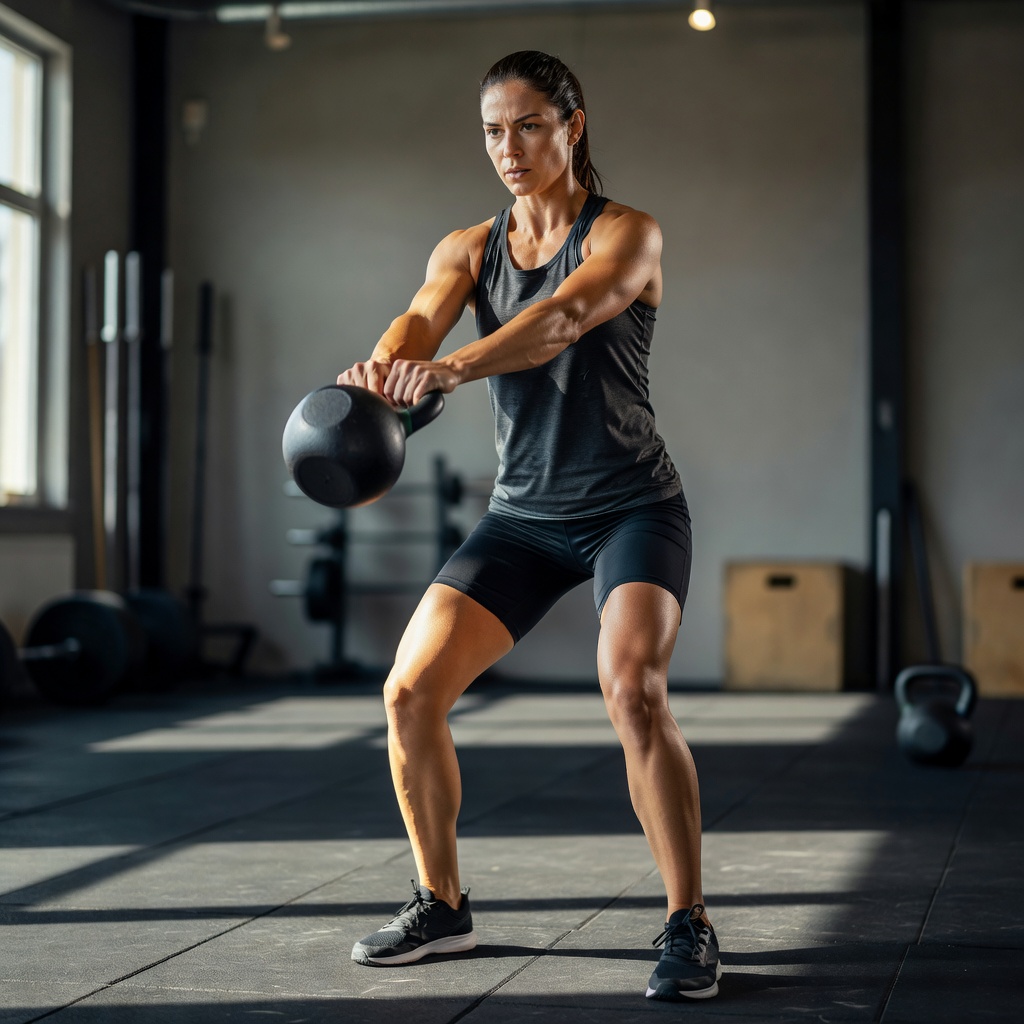
Training for the Real World
Functional training is rooted in the idea that the exercise you do in the gym should directly translate to improved performance outside of it. It mimics the mechanics of everyday tasks—lifting awkward objects off the floor, carrying heavy items, pushing doors, and twisting to reach something behind you.
Instead of isolating single muscles while sitting on a machine, functional training typically involves multiple joints and muscle groups working together simultaneously. By training these fundamental movement patterns under controlled resistance, we help improve your overall physical competence and coordination.
This approach often utilises free weights, kettlebells, medicine balls, and your own body weight to challenge your balance and core stability during dynamic movements. It teaches your body how to brace effectively when off-balance and how to transfer power from your lower body through your trunk and into your upper body.
The ultimate goal is to build a body that doesn't just look strong, but actually performs strongly in real-world scenarios, reducing the risk of strains when dealing with the unpredictable physical demands of daily life.
What Functional Training Includes
Multi-Planar Movement
Training that takes you out of the standard up-and-down motion, adding side-to-side and rotational exercises to build comprehensive strength.
Loaded Carries
Exercises like the Farmer's Walk, which challenge your grip, core, and posture simultaneously as you move weight across a distance.
Kettlebell Training
Utilising kettlebell swings, cleans, and presses to develop explosive power, hip drive, and dynamic shoulder stability.
Core Bracing
Teaching your midsection to resist movement (anti-rotation, anti-extension) to protect your spine during dynamic tasks.
Unilateral Exercises
Single-leg or single-arm movements, like lunges and single-arm presses, to correct imbalances and improve coordination.
Agility and Balance
Incorporating light footwork and stability challenges to ensure you remain nimble and capable of reacting quickly.
Who This Service Suits
General Fitness Seekers
People looking for a more organised, practical approach to exercise that translates directly to feeling better outside the gym.
Active Parents
Those who need the physical capability to constantly lift, carry, and keep up with young children safely.
Physical Workers
Individuals with demanding jobs who need to build injury resilience and improve their movement mechanics under fatigue.
Sports Enthusiasts
Recreational athletes who want to improve their rotational power, balance, and general athletic coordination.
The Functional Approach
DISCUSS
We talk about the physical demands of your daily life and identify movements you find challenging.
ASSESS
We look at how you naturally move, checking for imbalances or areas lacking stability.
PLAN
We build a workout focused on pushing, pulling, hinging, and carrying in multiple directions.
TRAIN
You work through the practical exercises using kettlebells, med balls, and free weights under guidance.
REVIEW
We ensure the training is translating to improved coordination and adjust the complexity as needed.
What to Expect During Sessions
Functional sessions tend to be slightly more dynamic than pure strength training. You will move in various directions and challenge your coordination.
- Dynamic Warm-up: Engaging the core and preparing the body for multi-directional movement.
- Skill Work: Taking time to learn complex mechanics, like a kettlebell swing or a rotational throw, before adding weight.
- Circuit Training: Often, exercises are grouped together to keep the heart rate up and mimic sustained physical effort.
- Balance Challenges: Expect to spend time on one leg or using uneven weights to force your core to stabilise.
- Variety: We use a wide range of tools—bands, balls, bells, and bodyweight—to keep the stimulus varied and practical.
Training Through Movement
"Training Through Movement" is the core philosophy here. Instead of focusing on isolating the bicep or the hamstring, we focus on the entire movement pattern. When you lift a heavy box off the floor in real life, your legs, back, core, and arms all have to work together in harmony. If they don't, injury occurs. Functional training specifically teaches these muscle groups how to fire together correctly, efficiently transferring force from the ground up through your hands.
Example Functional Session
Movement Prep (10 Mins)
Bear crawls, thoracic spine rotations, and glute bridges to activate the core and mobilize the spine.
Power / Skill (10 Mins)
Medicine ball rotational throws against a wall and practicing the mechanics of the kettlebell swing.
Main Circuit (25 Mins)
3-4 rounds of: Alternating Reverse Lunges, Single-Arm Dumbbell Push Press, and Heavy Farmer's Carries. Controlled pace, focusing on balance.
Cool-Down (5 Mins)
Light walking to lower heart rate and stretching targeted at the hip flexors and lats.
Important Considerations
Training should always be appropriate to your individual experience. When engaging in functional training, please remember:
- Start at an appropriate level; coordination takes time to develop before adding heavy weight.
- Use suitable exercise technique; moving dynamically requires strict attention to form.
- Progress gradually as your balance and stability improve.
- Stop if an exercise causes unusual pain, particularly in the lower back or knees during rotational movements.
- Seek appropriate professional medical advice when needed. We do not diagnose injuries or provide rehabilitation.
Functional Training FAQs
No. While it can involve circuits, true functional training is about practical movement mechanics—like carrying heavy things or learning to squat properly. Jumping is only included if appropriate for your level.
Not at all. Improving coordination and balance is actually one of the primary benefits of this training style. We start very simply and progress as you improve.
While we cannot diagnose or treat medical conditions, many clients find that building core stability and learning how to hinge at the hips properly helps alleviate the stiffness associated with sitting.
We utilize a variety of tools that allow for free movement, including kettlebells, dumbbells, medicine balls, resistance bands, and bodyweight.
No. Improved physical capability relies on consistency, effort, and recovery outside the gym. Individual results vary and no specific outcome can be guaranteed.
Explore Related Training
Ready to Start Training?
Build the capability to handle life's daily physical demands with ease. Enquire below to start functional training.
Start Training